A Shopify storefront you can actually edit yourself.
Custom Online Store 2.0 theme work for apparel and retail brands: schema-driven sections you rearrange in Shopify's own editor, custom collection templates, and a storefront built around your brand instead of around a theme's constraints.
What I Build
- Schema-driven sections — every block is defined so you can add, reorder, and re-content it from the theme editor
- Custom collection templates — different merchandising logic for different parts of the catalog
- Brand-led storefront design — built from your identity, not a theme's defaults
- No page-builder apps — native Shopify sections, so there's no extra subscription and no vendor lock-in
- Phased delivery — scoped and billed in stages, so you see working output before committing to the next phase
Verified Work: Top of Mind
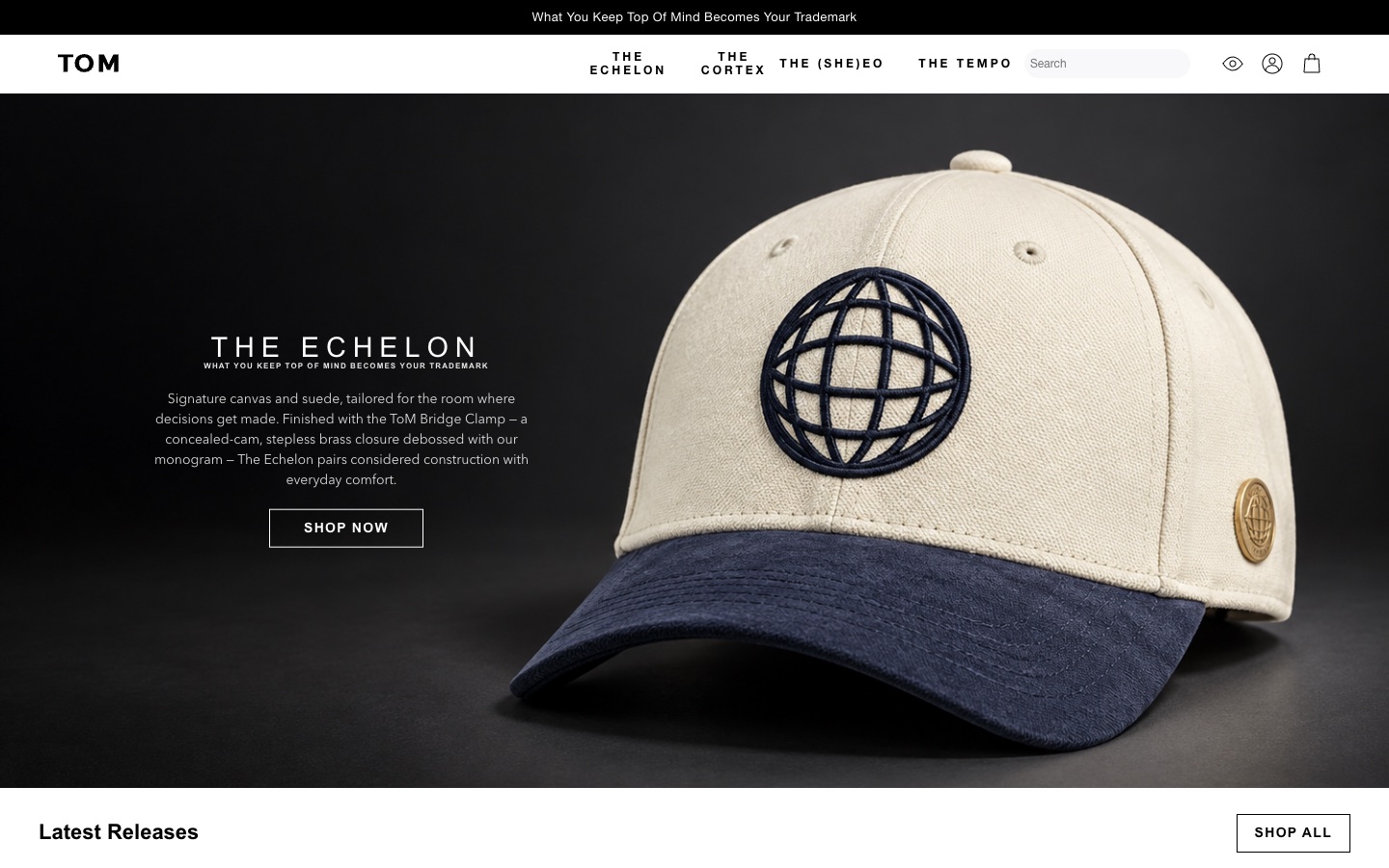
Top of Mind is a premium headwear brand and my first paying client. I built custom Shopify Online Store 2.0 theme work — four collection templates, schema-driven sections, brand and product content, plus a "Find Your Fit" sizing guide. The Phase 3 preview below is a separate static review demo with checkout disabled, not a live Shopify shop.
When custom is the wrong call
If your brand is new and your catalog is small, buy a good paid theme and spend the difference on product and photography. Custom development earns its cost later — when you're fighting a theme's layout limits, paying monthly for page-builder apps to work around it, or your brand presentation has outgrown what the theme can express. I'll tell you if you're not there yet.
Questions People Ask First
Should I use a Shopify theme or build a custom storefront?
Start with a paid theme if your brand is young and your catalog is simple — it's far cheaper. A custom storefront earns its cost when you've outgrown a theme's layout options, you're stacking page-builder apps to work around it, or your brand needs a presentation the theme can't express.
What is Shopify Online Store 2.0 and why does it matter?
Online Store 2.0 lets sections be defined with a schema and placed on any template, not just the homepage. Practically, it means the merchant can add, remove, reorder, and re-content blocks on any page from the theme editor — so routine changes don't require a developer.
Will I need a developer every time I want to change something?
That's the thing I build against. Sections are schema-driven, so copy, imagery, ordering, and most layout choices are editable in Shopify's own theme editor. You should only need me for genuinely new functionality.
Do you build with page-builder apps?
No. Page-builder apps add monthly cost, slow the storefront down, and tie your layouts to a vendor. I build native Shopify sections instead, so the editing experience is Shopify's own and there's nothing extra to subscribe to.
Tell Me About Your Store
Send your storefront and what you're fighting with. I'll reply with what I'd change and whether custom work is actually the right spend.