Top of Mind
A custom Shopify Online Store 2.0 storefront for a premium headwear brand, built so the merchant can change anything without touching code.
Scope: custom theme development, four collection templates, schema-driven sections, brand and product content across the storefront, and a "Find Your Fit" sizing guide. Delivered in phases. The Phase 3 review preview linked below is a static demo, not a live Shopify store or checkout.
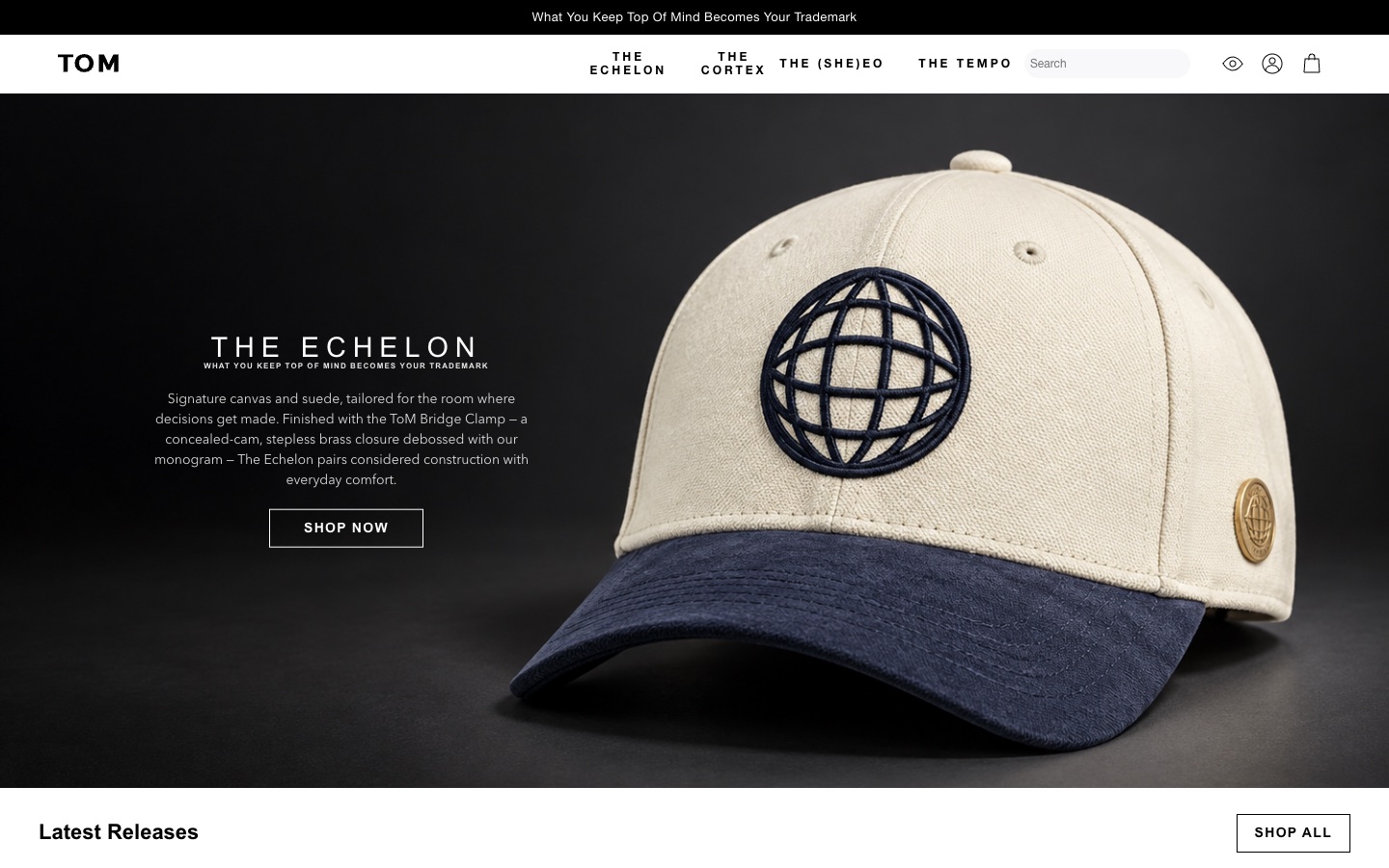
Phase 3 review preview, showing the updated TOM homepage. This static demo uses a fixture catalog with checkout disabled; it is not the live Shopify shop. Cross-device testing and follow-up fixes remain in progress. No sales results are claimed.
Explore the Phase 3 Preview ↗The Challenge
A headwear brand's storefront lives or dies on presentation — fit, materials and silhouette have to read clearly before someone will buy a hat they can't try on. An off-the-shelf theme can show products, but it dictates how they're arranged, and every deviation turns into either a developer ticket or another monthly page-builder app.
The brand also needed to run the store themselves afterward. A storefront that requires a developer for a seasonal copy change is a storefront that slowly goes stale.
The Approach
I built the theme on Shopify's Online Store 2.0 architecture, defining every block with a schema so it can be added, reordered, and re-contented from Shopify's own theme editor. Four collection templates let different parts of the catalog be merchandised differently rather than forcing one layout across everything.
No page-builder apps. The editing experience is Shopify's native one, which means nothing extra to subscribe to and no vendor holding the layouts.
What Was Built
- Custom Online Store 2.0 theme, sections defined by schema
- Four collection templates for distinct merchandising logic
- Brand and product content applied across the storefront
- Homepage image composition and interface refinements
- A "Find Your Fit" sizing flow
- A shareable review preview for client sign-off on each phase
Evidence and Limits
Top of Mind was my first paying client, and the work was scoped, delivered and invoiced in phases with the client reviewing a preview before each payment.
I'm not publishing revenue, conversion or traffic figures for this project. I don't have client-approved analytics for it, and inventing a number would be worth less than the work itself. What's above is what was built.
Need the same thing?
If you're fighting a Shopify theme's limits or paying monthly for apps to work around it, that's the problem this service exists for.
Request a Free Teardown